
Topic
FIRE & Retirement
Financial independence isn't about moving to a beach and never working again (though that's an option). It's about buying optionality — the ability to say no to bad projects, bad bosses, and bad situations. These posts cover the 4% rule, coast FIRE calculators, lean vs fat FIRE, and what the spreadsheet actually tells you about when "enough" is enough. Warning: once you run your FIRE number, you can't un-run it.
8 articles in this topic.
Featured posts
-
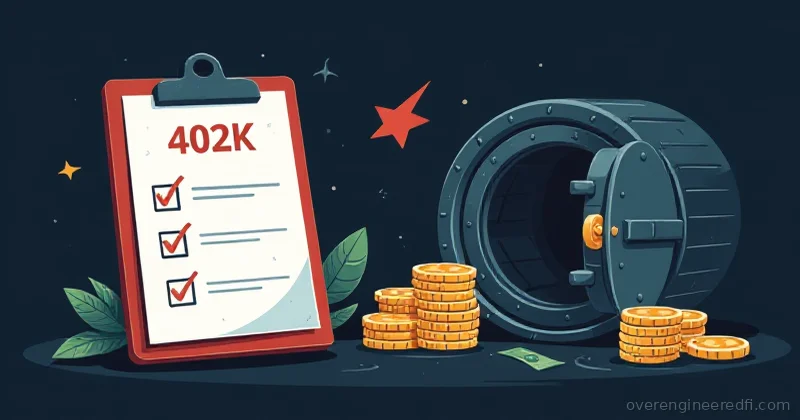
Rolling Over Your Old 401k: A Checklist
Left a job with an old 401k sitting there? Here's exactly what to do, all four options, the direct vs indirect rollover trap, and a step-by-step checklist.
9 min read -
Savings Rate: The Only Lever That Matters
Your savings rate determines your retirement timeline faster than investment returns ever will. Here's the math, the table, and how to calculate yours honestly.
8 min read -
Lean FIRE vs Fat FIRE: Pick Your Number
Lean FIRE, Fat FIRE, Barista FIRE, ChubbyFIRE, the full spectrum mapped with real dollar targets so you can stop theorizing and pick your actual number.
9 min read -
Coast FIRE: The Lazy Path to FI
Coast FIRE means your investments are already on autopilot to retirement, no more contributions required. Here's the math and why it changes everything.
8 min read -
Asset Allocation by Age: A Practical Guide
The 110-minus-age rule is a solid starting point, most people ignore it. What it means, why young investors should skip bonds, and allocation by decade.
8 min read -
401k Math: What You're Actually Saving
Maxing your 401k doesn't cost $23,500. At a 35% tax rate it costs $15,275. Here's the math, the 2026 limits, and how to stop leaving money on the table.
8 min read




All FIRE & Retirement articles
- Rolling Over Your Old 401k: A Checklist
- Savings Rate: The Only Lever That Matters
- Lean FIRE vs Fat FIRE: Pick Your Number
- Coast FIRE: The Lazy Path to FI
- Asset Allocation by Age: A Practical Guide
- 401k Math: What You're Actually Saving
- The 4% Rule: Does It Still Hold?
- Your FIRE Number: How to Calculate It